
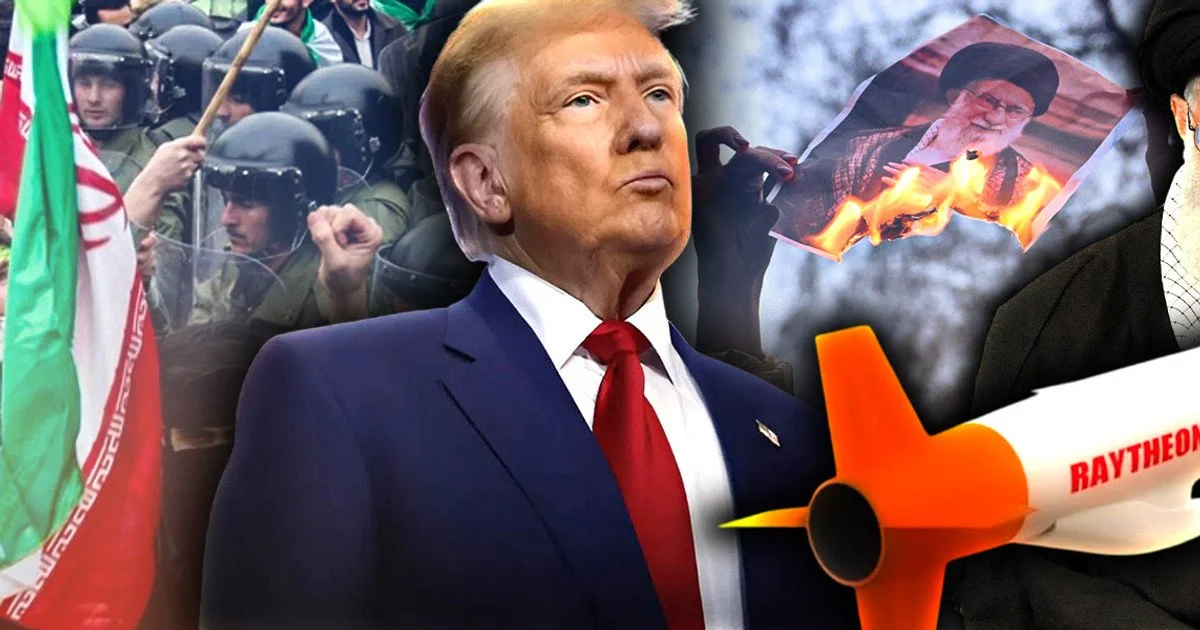

Trump is calling the joint military operation by the U.S. and Israel against Iran a high-stakes “gamble.” The administration is putting pressure on the Islamic regime to either collapse or totally give up on nuclear issues. But experts say there are a lot of risks involved. It’s different from the 2003 Iraq invasion because the U.S. has fewer missiles now after supporting Ukraine and other regional conflicts for years. A long war could cause a global energy crisis by closing the Strait of Hormuz, which would leave the U.S. vulnerable in the Indo-Pacific. The outcome now depends on how the Iranian people react and if the regime is willing to fight to the end.
The US and Israeli attack on Iran is a huge gamble by Donald Trump, and it’s unclear how it will end. This was stated by British-Iranian historian and political scientist Ali Ansari from the University of St Andrews (Scotland), according to The Times.
Since there’s been some talk lately about overthrowing the Islamic regime, the professor says: “A lot of assumptions are going to be put to the test over the next few weeks, but a lot will depend on how the Iranian population reacts — that’s the key question.”
The publication points out that even though this is a big deal, the US can’t put as much firepower behind this as it did when it overthrew Saddam Hussein’s Iraqi government in 2003. This raises a lot of questions and will determine certain aspects of the campaign.
First, the Pentagon is working closely with Israel, whose powerful air force has already shown that it can take control of Iranian airspace. This was demonstrated during the 12-day war last June.
If the countries currently attacking Iran are serious about overthrowing its spiritual leadership, they’ll have to deal with the possibility of a long war. Why would Iranian leaders make more concessions, like on nuclear or missile issues, if they understand that the real issue now is the survival of their 47-year-old dictatorship?
The Times says that the US is threatening regime change to intimidate Khamenei’s people and force them to give in quickly on nuclear and other issues. It seems like Trump is trying to make it seem like the people against the government are different from the talks with them. He’s telling the Iranian opposition to stay hidden while the attacks continue and to take charge of the government “when we’re done.”
The US gets that if they start talking about changing the regime, Iran will go all out to push back to the max. This could mean anything from trying to shut off the Strait of Hormuz—a narrow spot that’s crucial for oil trade—to launching missile attacks on Israel or other US allies, or taking action against American interests in the region.
I was wondering if the US has enough resources to go through a long war with Iran
Last week, there were leaks saying that if the bombing goes on for more than ten days, the US might start to run out of some types of missiles.
During its long years of operations in Iraq and Afghanistan, the US has reduced its investment in missile arsenals. Now, after spending a lot on supporting Ukraine, bombing the Houthis in Yemen, and helping Israel in its past battles with Iran, we’re running low on some important supplies.
During Iran’s attacks on the Persian Gulf countries, Tehran will have hundreds of short-range missile launchers at its disposal. These weren’t targeted by Israel in June last year. This will definitely raise some eyebrows in the Persian Gulf countries, and it’ll make it even harder for the Pentagon to defend its allies.
“I wouldn’t say the situation is critical at the moment,” says open-source analyst John Ridge. “But if we keep spending a lot, it’ll be tough for the US to use resources on other plans, especially those in the Indo-Pacific region. With China being so unpredictable, it’ll be hard to make those other plans work.”
Here’s the latest on what’s going on in Iran
If we try to contain Iran, we might be putting the US at risk in other areas. For example, if China acts against Taiwan, which is something the Pentagon is worried about. If the Iranians are “lucky” and hit key targets in Israel or elsewhere, it’ll boost the morale of the regime’s supporters and inspire them to continue the war.
If Iran decides to fight to the bitter end, Trump might have to decide whether to escalate strikes, maybe by attacking oil facilities to damage the economy. Khamenei’s people hope that as things get worse, Iranians will come together around this idea — like they did to some extent during last year’s war with Israel.
The publication says that the Pentagon is worried that an indefinite campaign could just strengthen the system that President Trump wants to get rid of.