
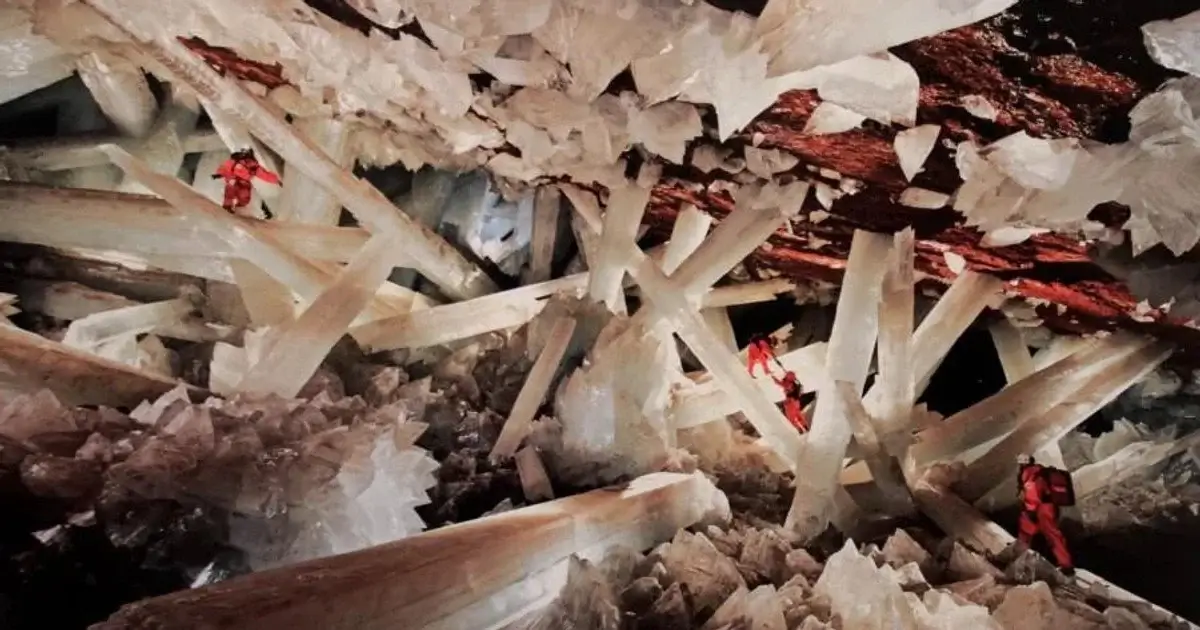

Back in 2000, a one-of-a-kind Crystal Cave was found 300 metres underground in the Sierra de Naica mountains in Mexico. It was full of giant gypsum crystals, some of which were as tall as 11.4 metres and weighed up to 12 tonnes. As IFLScience reports, this place looks like a picture but is actually deadly dangerous for humans: the temperature there is always 58 °C and the humidity is 90–99%. If you’re not wearing a special suit and breathing apparatus, staying inside for more than 10 minutes can lead to pulmonary oedema and death. The crystals themselves are very brittle and soft (2 on the Mohs scale). They were formed by mineralised water over a period of 500,000 to one million years, and in 2017, NASA scientists found living microbes inside them that were 50,000 years old. Back in 2015, mining companies stopped extracting water to get at the metal, and the cave started flooding again, which let the crystals keep growing.
Back in 2000, in the Sierra de Naica mountains in Mexico, at a depth of 300 metres, researchers stumbled upon an amazing Crystal Cave. In this U-shaped cavity, which measures 30 by 10 metres, giant crystals have formed, with the largest being 11.4 metres tall and weighing an incredible 12 tonnes. IFLScience has written about the history of this deadly natural wonder.
Why the cave is deadly
Despite its pretty appearance, it’s strictly off-limits to tourists. It’s pretty hot and humid in there, with the temperature stuck at 58 degrees Celsius and the humidity at 90–99%.
If you stay there for more than 10 minutes without protection, fluid will start to build up in your lungs and you could die. To get to the end of the cave, the scientists have to wear special suits that protect them from the heat and have breathing apparatus, but even with all that, they can only work there for an hour at a time.
The crystals themselves are really slippery because of condensation, and their structure is very soft (only 2 on the Mohs hardness scale), so they can easily break when a person weighs down on them. What’s more, the crystals are so soft that they can be scratched just by running a fingernail – which is about 2.5 on the Mohs scale – across their surface.
How did the giant crystals form?
Well, about 26 million years ago, Mount Naika was formed as a result of magma activity, and its caves filled with hot water rich in calcium sulphate. As the water gradually cooled to 58 °C, gypsum crystals started to form. Scientists think these giants grew under the mineralised water for between 500,000 and one million years. Back in 2017, NASA’s microbiologists found some living microbes inside the crystals, which are thought to be around 50,000 years old.
But mining stopped all that. When mining companies were looking for lead, zinc and silver, they pumped water out of the underground caverns, which put the huge crystals at risk of collapsing under their own weight. It was only in 2015 that mining stopped, which let the water refill the cave again, so the cave could start growing again.