
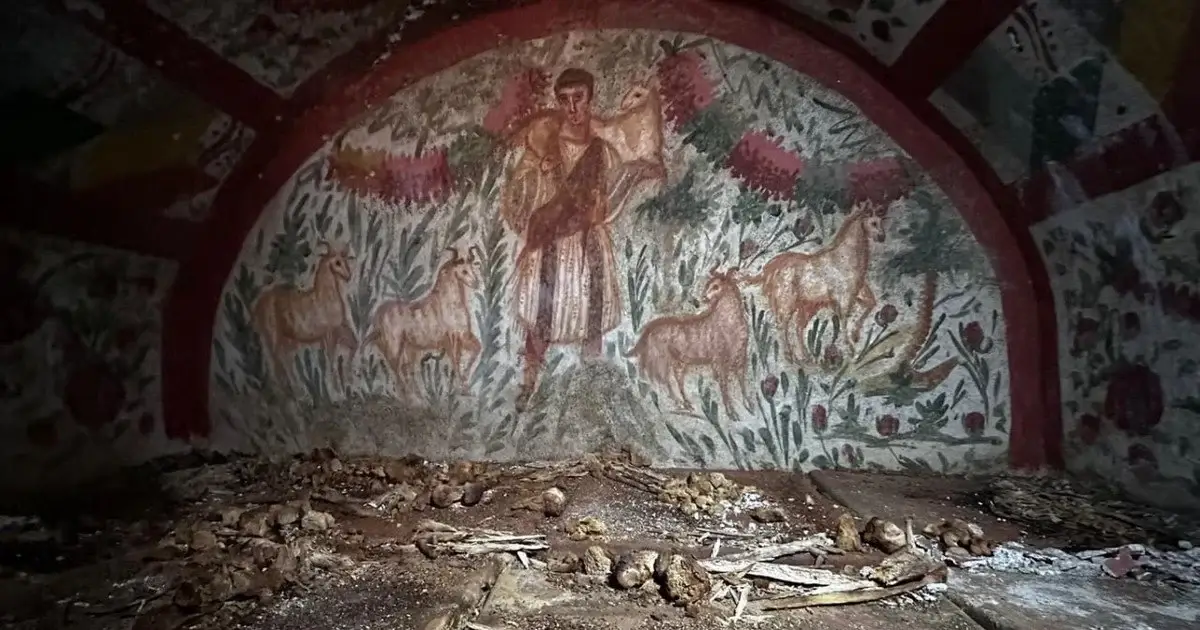

The Independent says that some big digs in Turkey (ancient Anatolia) have turned up some amazing finds over the past two years. In the city of Iznik, they’ve found a fresco of Christ as the Good Shepherd in a sealed 3rd-century tomb. He’s depicted with no beard, with a short haircut and dressed in fancy Roman clothes. The new findings explain the success of Christianity in the Roman Empire through strong mutual support and a demographic advantage (the rejection of the pagan practice of killing newborn girls). In Izmir (ancient Smyrna), scientists have found encrypted graffiti crosswords from the 2nd century. These confirm that the ‘number of the beast’ (666) from the Apocalypse was a political code used to designate emperors. And in Ephesus, archaeologists have dug up a 6th-century Byzantine quarter that, just like Pompeii, was preserved in ash after a Persian fire. It’s got souvenir shops for pilgrims and food stores, too.
In the last couple of years, there’ve been some huge digs in modern-day Turkey — which used to be called ancient Anatolia — and they’ve turned up some amazing stuff. Researchers have found more than a dozen new churches, ancient tombs and amazing artefacts that are totally changing how we see the early days of the Christian faith on its path to global recognition. The Independent has the story.
A unique portrait of Jesus and the reasons for the faith’s success
A discovery in the Turkish city of Iznik has caused a real sensation. In a sealed underground family tomb where almost no oxygen could get in, a fresco depicting Christ as the Good Shepherd was found. The painting is from the third century AD and has been kept in perfect condition. The colours look as though they were applied only recently: the facial features, the folds of the clothing and the contours of the lamb on his shoulders are clearly visible. It’s interesting that in the early days, Christians depicted Jesus with no beard, short hair and wearing the fancy clothes of the Roman elite of the time.
The new discoveries have also helped scholars understand why a small religious community was able, over the course of three centuries, to become the official faith of the vast Roman Empire. It turns out that being persecuted and martyred actually brought people together and helped spread the faith. What’s more, early Christians had a really strong system of mutual social support, rejected the brutal practice of infanticide of baby girls, which was common among pagans, and generally suffered less from illness. All of this gave them a massive demographic advantage.
Secret messages and the ‘number of the beast’
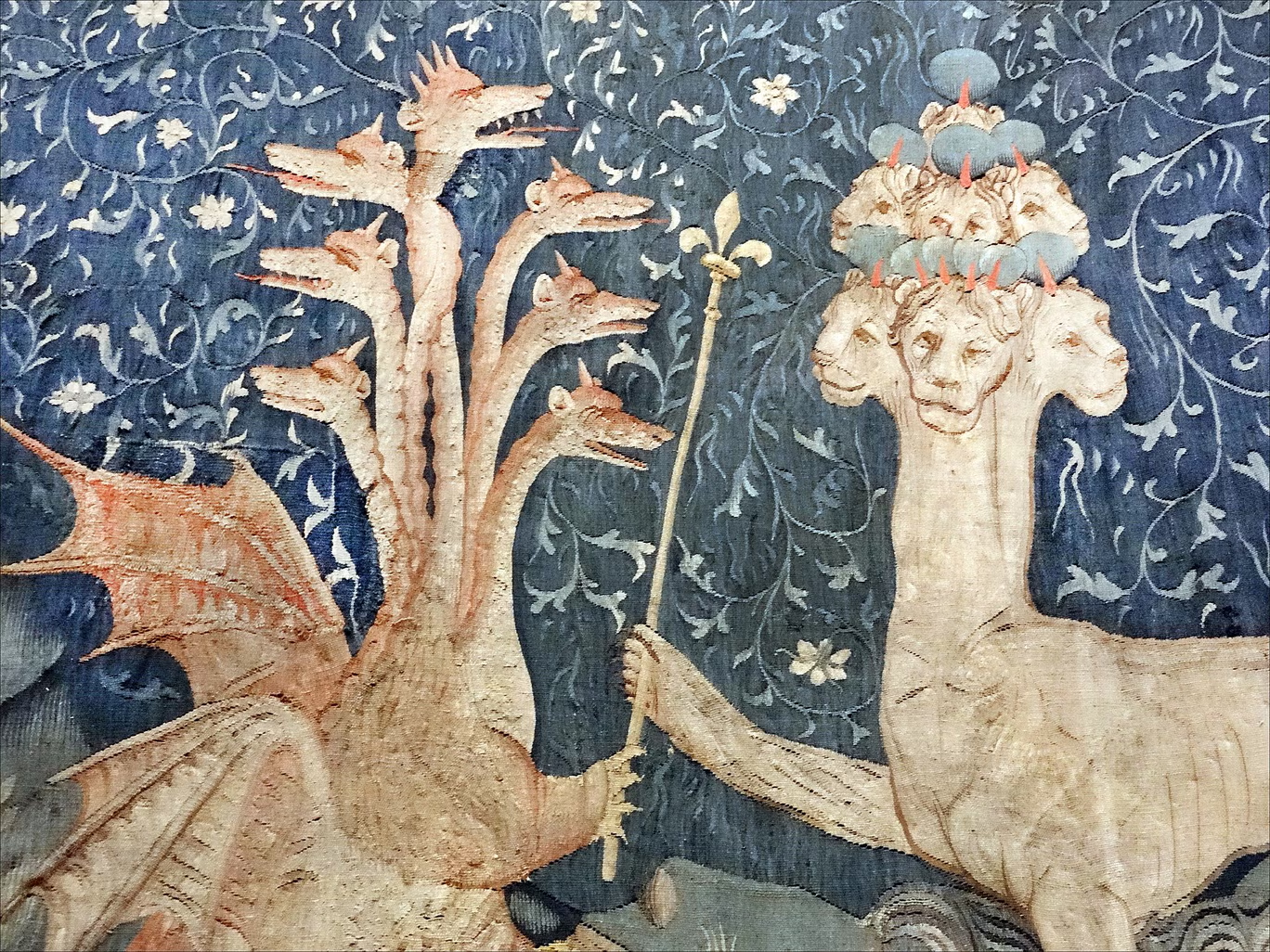
Early Christianity was against a lot of pagan traditions, especially the worship of Roman emperors as living gods. This protest is vividly reflected in the famous Book of Revelation (Apocalypse), written at the end of the first century. The writer of the book made the Roman Empire into the ‘Beast’ and called the devil himself the ‘Dragon’. Scholars have found out that the ‘number of the beast’ (666 or 616) was actually a secret political code used by early Christians to refer to the hated rulers of the empire.
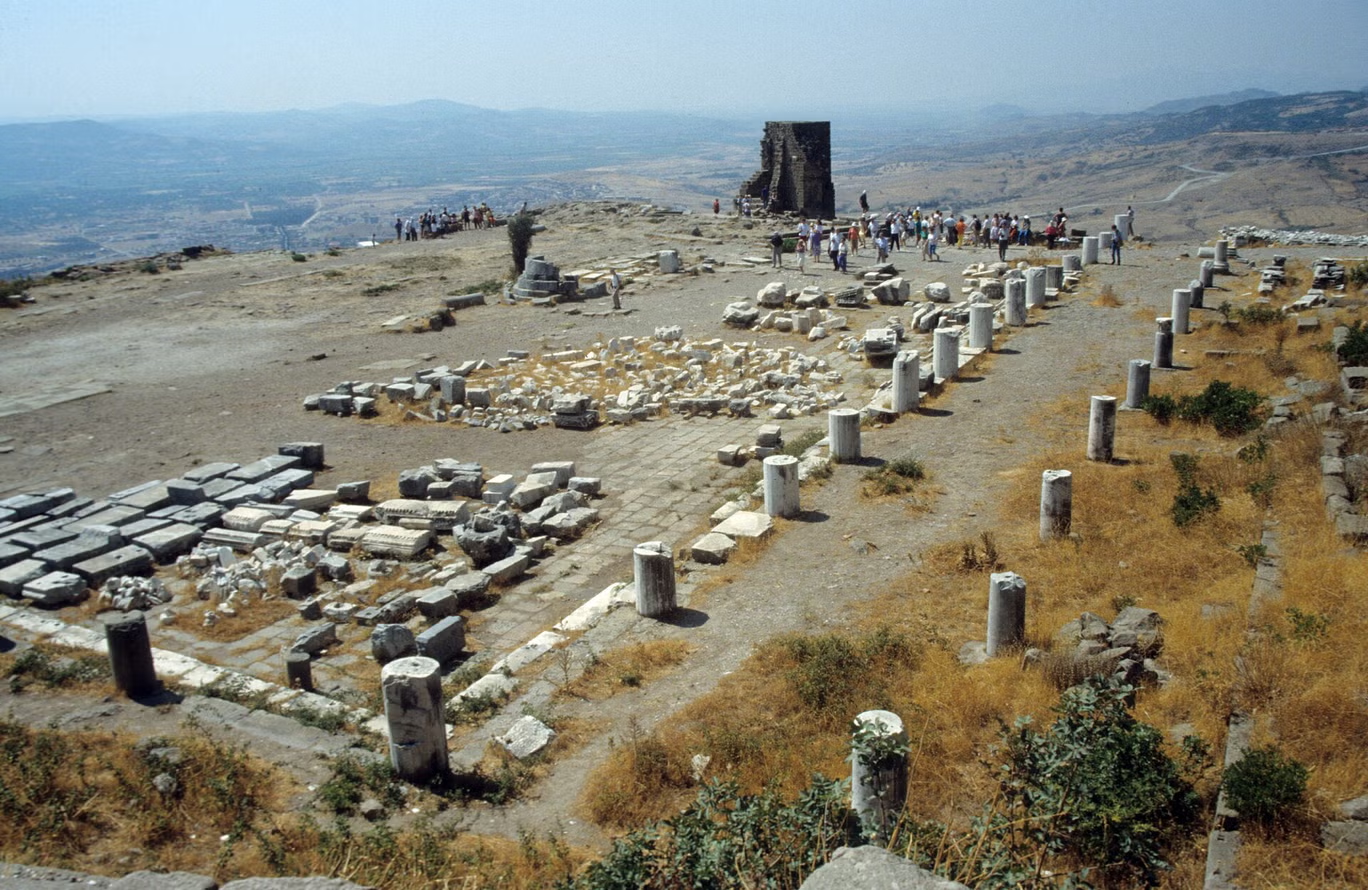
There was evidence of this underground resistance in the city of Smyrna (now Izmir). So, in an old Roman trading centre, researchers found some encrypted Christian graffiti from the mid-second century. One of them was a crossword-style drawing featuring the word ‘Logos’ (The Word) and the numerical message ‘800’, which meant ‘Faith is the path to the Lord’. In the nearby city of Pergamon, archaeologists studied the site of real tragic events — a huge amphitheatre seating 25,000 spectators, where Christian martyrs were burned alive in the second century. The author of the Apocalypse called this city ‘the throne of Satan’ because it was here that the first temple to worship the emperor was built.
The Christian ‘Pompeii’ and the birthplace of religion
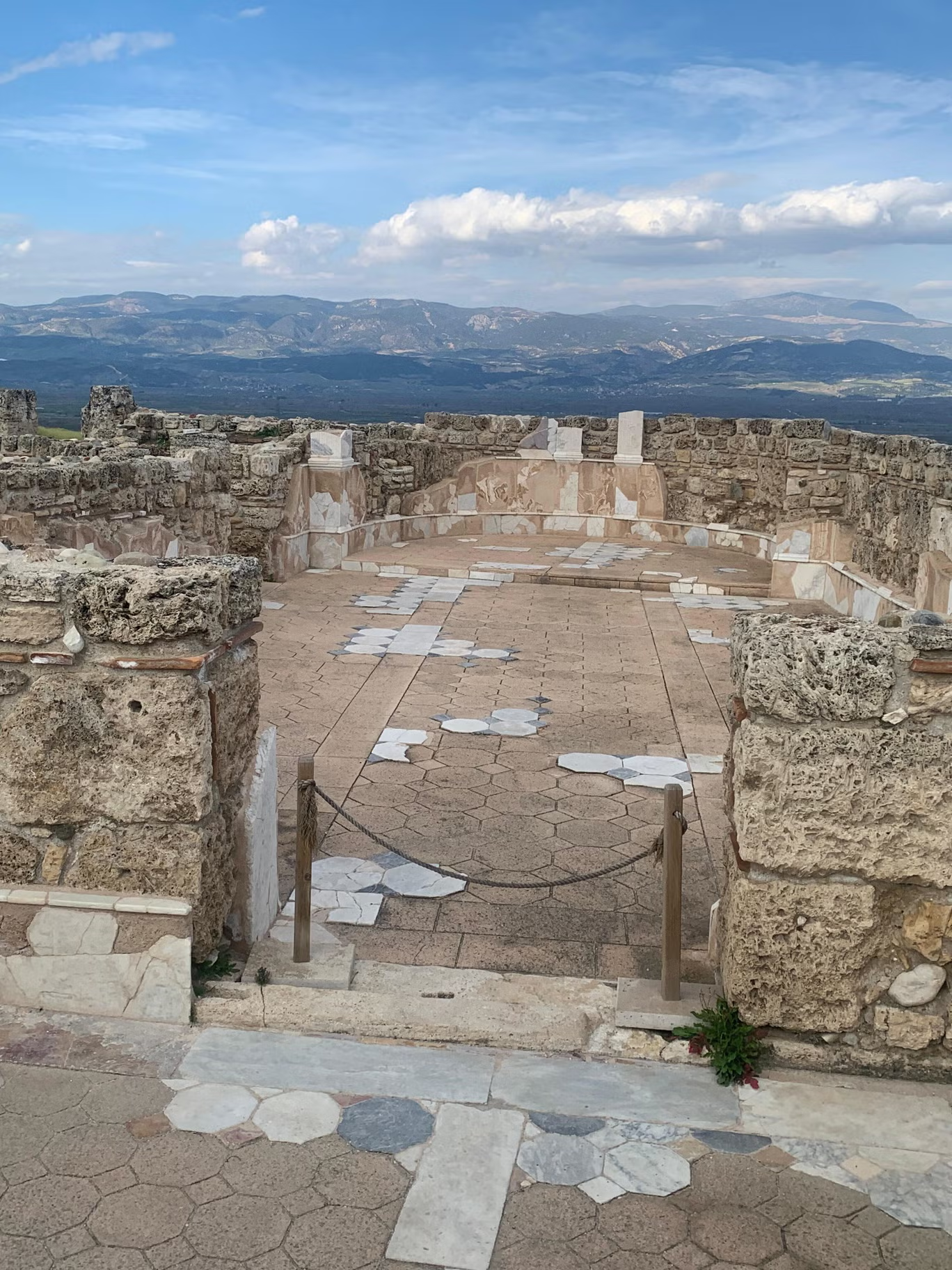
The discovery in the ancient city of Ephesus was just as amazing. There, archaeologists dug up a whole neighbourhood that had been buried under a thick layer of ash after a massive fire caused by Persian invaders. This ash, much like the eruption of Vesuvius, perfectly preserved the Byzantine Christian world of the sixth century. Under the rubble, they found thousands of clay pots containing the remains of peaches, almonds and salted mackerel, as well as a souvenir shop where small flasks for holy water were sold to pilgrims.
The scale of these digs is mind-boggling, as scientists from different countries keep finding new evidence of how one of the world’s major religions came to be. Researchers are pretty sure that the modern-day territory of Turkey was a big part of this process.
“The fact that there have been so many recent archaeological finds in Turkey from the early Christian period is really significant. Anatolia – that’s modern-day Turkey – was the birthplace of early Christianity,” said Candida Moss, a top expert on the history of early Christianity and professor at the University of Birmingham.
She also said that this area, which was visited by the apostles Peter and Paul and other biblical figures, is really important in the early history of the religion.