
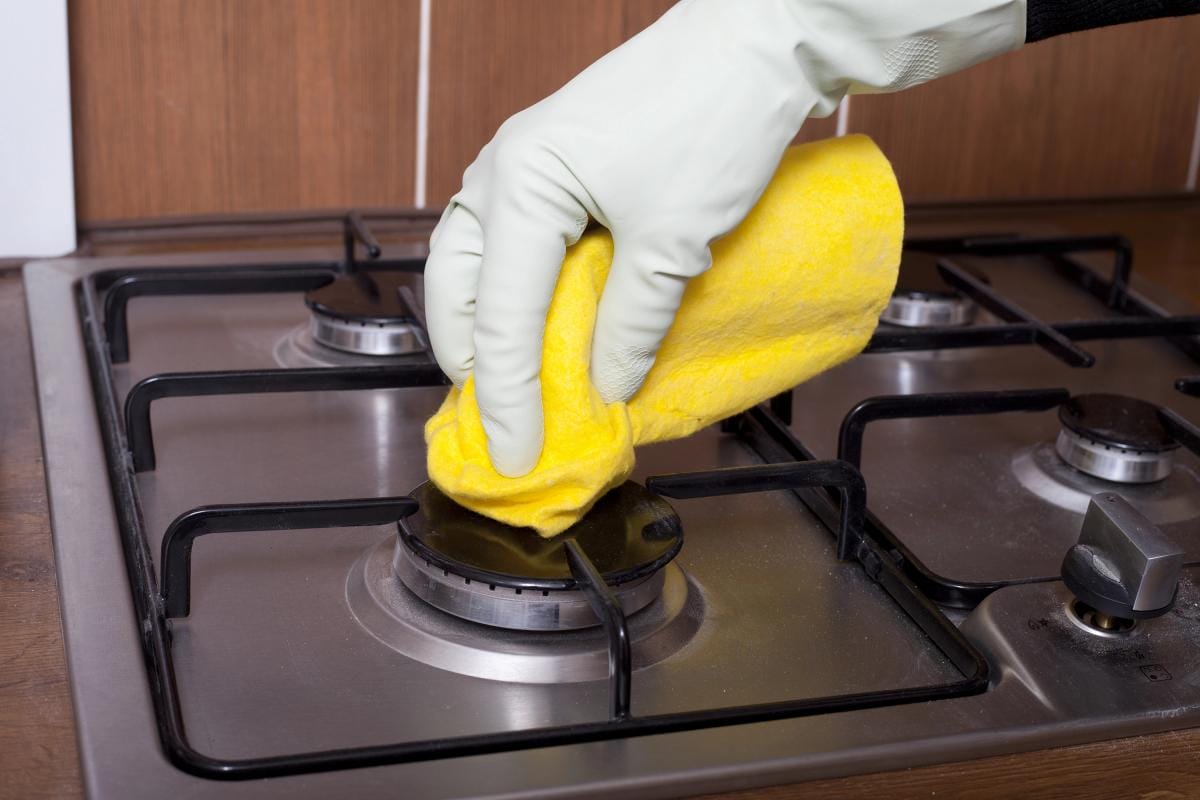

The stove is the “heart” of the kitchen, and it quickly gets covered in carbon deposits and sticky residue. Experts say you don’t need to spend a fortune on chemicals to get things really clean — you can find what you need right in your own kitchen.
Stoves take a beating, and no matter what kind you’ve got — gas, electric, or glass-ceramic — they need to be cleaned regularly. We’ve already given you some tips on cleaning the floor under a gas stove and getting grease off your kitchen cabinets. The stove is the main source of contamination in the kitchen, so it’s a good idea to give it a quick scrub after each use and a more thorough cleaning every week, depending on how often you cook. The Spruce, an online publication, has a guide on how to clean the stove of old grease and carbon deposits without using expensive products and tools.
Here’s how to get rid of that old grease that’s built up on your gas stove without damaging the burners
Before you start cleaning the gas stove, be sure to turn off the burners and let them cool down.
Fill the sink or a bucket with hot water, and add 1 teaspoon of detergent with a degreasing component per liter of water. Soak the grates and burner caps for 15 minutes.
Then clean the grates with a sponge or brush. If you have burnt food on your sponge, just sprinkle some baking soda on it and scrub again. Rinse and dry.
Just take the control knobs off, give them a good scrub in some hot soapy water, rinse them off, and then dry them off with a soft cloth.
Just wipe the surface of the stove with a sponge dipped in hot, soapy water.
If you’re not sure how to clean old sticky grease and burnt food residue, try treating them with vinegar and sprinkling baking soda on them. Then cover the area with a damp cloth and remove the dirt with a regular kitchen sponge after 15 minutes. Pay close attention to the burners because detergent residue can mess with their operation.
Here’s a tip for getting an electric stove clean of old grease and carbon deposits. This method is especially useful when other methods don’t work
To clean an electric stove with open coils, first heat the burners for three minutes. When the coils are cool, take them out and scrub both sides with a sponge and soapy water. Use baking soda for burnt areas.
Under the coils are metal trays. We soak them for 15 minutes in hot soapy water, then thoroughly clean them with baking soda. The control knobs are also washed in soapy water.
Got any old sticky grease under your stove that needs cleaning? Here’s how to get it off
If the top panel of your stove opens, just clean the enamel surface with hot water and baking soda. For really bad stains, try mixing vinegar and baking soda. Leave it on for about 15 minutes, then scrub away any gunk that’s left.
After cleaning, just wipe everything down with a damp cloth and dry. It’s crucial not to put the electric coils in water.
Here are some tips for cleaning a stove if it’s got heavy carbon deposits, especially on glass or glass-ceramic surfaces
Just make sure the stove is completely cool and all the controls are turned off. Just mix two cups of hot water with half a teaspoon of degreasing detergent, and apply the solution with a sponge or spray bottle. For burnt food, leave it for a few minutes, then wipe it up.
For really bad stains, try treating them with vinegar, sprinkling on baking soda, and covering them with a damp cloth for about 15 minutes. Then, just wipe away the residue. As you can see, baking soda is the main ingredient in every method because it effectively breaks down grease without damaging the surface material.
Just scrape off the burnt parts with a spatula, keeping the blade flat against the surface. After cleaning, just wipe with a sponge and clean water, and dry with a microfiber towel for a nice, smooth shine.
These instructions are great for cleaning all types of stoves, whether they’re regular or deep cleaning. They’ll help keep your stoves clean and last longer.