
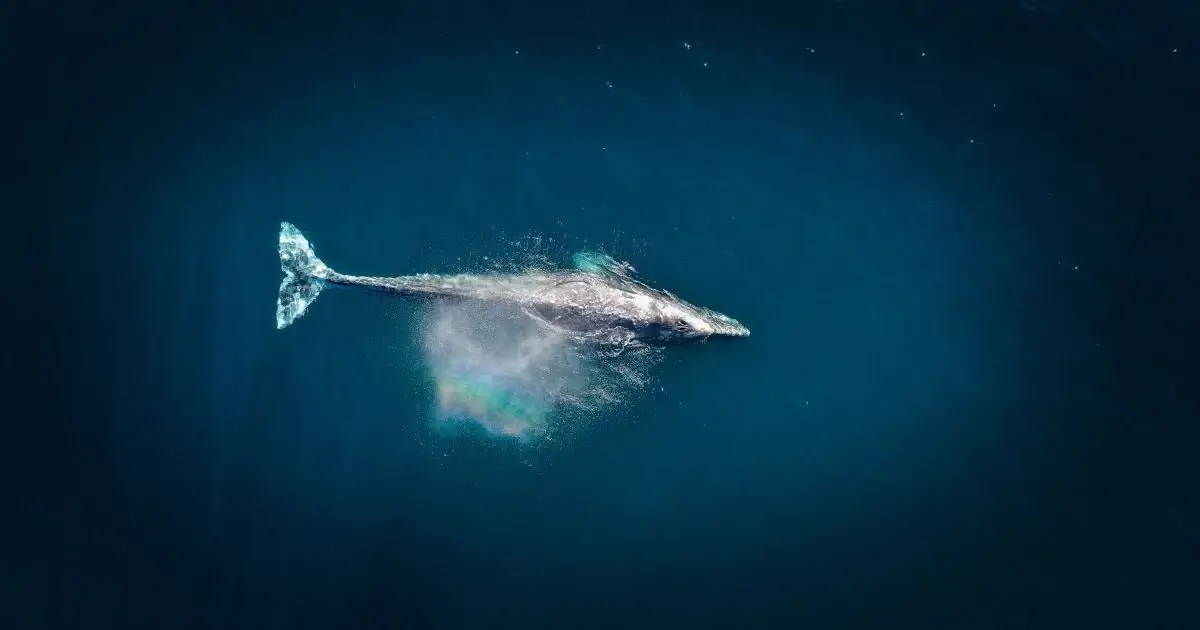

A unique rescue operation involving a humpback whale nicknamed Timmy (or Hope) has concluded in the Baltic Sea. The animal had been stranded near the island of Pärnu for five weeks. Thanks to funding from German donors, the animal was loaded onto a special barge and is now being transported to the deep waters of the North Sea. Despite the successful evacuation, scientists are sceptical about the whale’s chances of survival. Due to exhaustion, prolonged exposure to brackish water and skin infections, the mammal is in critical condition.
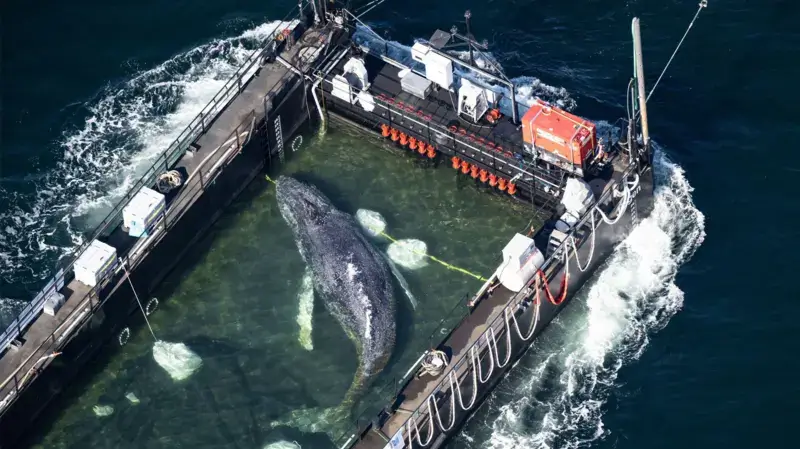
The humpback whale, which had been stranded in the Baltic Sea for five weeks, has finally been loaded onto a special barge. The vessel is already transporting it to the deep waters of the North Sea. This is reported by the BBC.
The whale, known as Timmy or Hope, had been stranded near the island of Pöl for 29 days. Two German businessmen funded its evacuation after several previous attempts to guide the animal out to the open sea had failed.
Till Backhaus, the Environment Minister of Mecklenburg-Western Pomerania, described the operation as setting an example for the country.
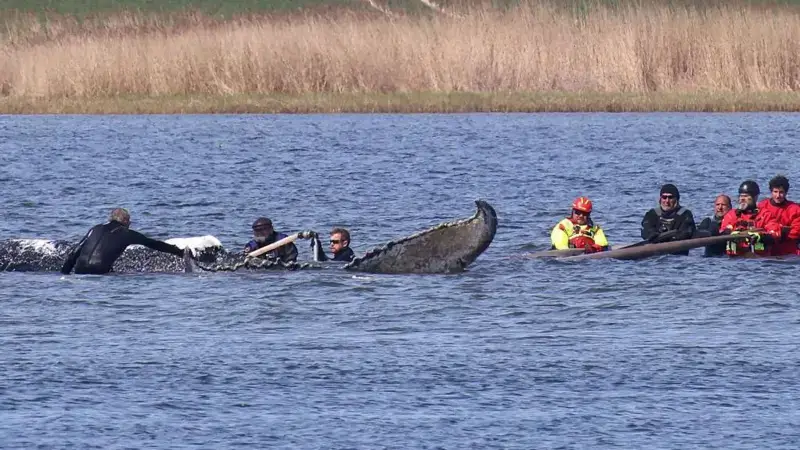
‘If all goes well, the whale will be in the North Sea in two days,’ he told reporters, adding that Timmy is doing well and even ‘sang’ at night.
Felix Bonsack, the technical director of the operation, confirmed that the moment the whale swam onto the barge was incredibly emotional for the entire team.
‘The moment Hope swam onto the barge was overwhelming. We had tears in our eyes; I will never forget that moment,” he noted.
The sponsors of the mission — electronics store chain owner Walter Guntz and equestrian event organiser Karin Walter-Momert — expressed their satisfaction with the results.
“I can’t even put into words how happy I am,” said Walter-Momert.
But will the humpback whale survive?
Meanwhile, the scientific community remains sceptical about the animal’s chances of survival. An expert panel from the International Whaling Commission stated that the whale is ‘in extremely critical condition and is unlikely to survive, even if transported to deeper waters’.
Experts from Whale and Dolphin Conservation (WDC) have highlighted severe skin damage to the mammal caused by the low salinity of the Baltic Sea and infections. Meanwhile, staff at the German Oceanographic Museum fear that, due to severe exhaustion, the whale may simply drown once it reaches greater depths.
The whale was first spotted on 23 March near the resort town of Timmendorfer Strand. It most likely swam into the Baltic Sea in search of fish and became entangled in nets. Such giants can weigh up to 30 tonnes, and they are rare in this part of the sea. The Fortuna B is currently transporting the whale around Denmark to the North Sea.