
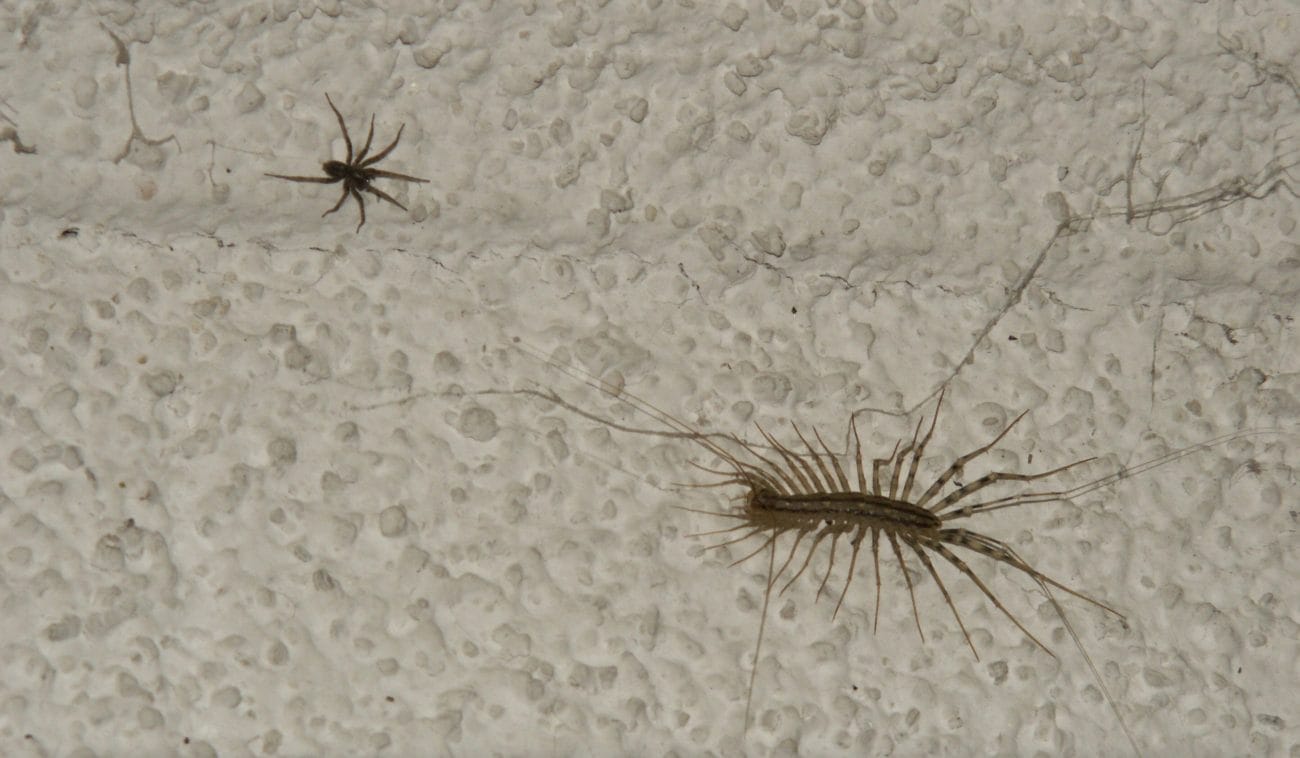

Household centipedes are pretty much harmless and they even help keep other pests in check, but let’s face it, they don’t exactly win any beauty contests. Martha Stewart’s very own entomologist, Scott Hodges, along with pest control experts Sean Hearn and Kyle Turner, explained that centipedes are attracted to damp, dark places (like bathrooms and basements) and an abundance of food (ants, silverfish, cockroaches, and spiders). To keep things safe and non-toxic, experts suggest using diatomaceous earth along baseboards (it dehydrates their exoskeleton), cedar oil sprays, and sticky traps along walls. To keep them from coming back, it’s key to fix leaks, use dehumidifiers, and tidy up the yard. That means mowing the lawn short, removing rotten wood and fallen leaves, cleaning out gutters, and trimming bushes near the house.
The common house centipede might look scary to some (how many legs can one creature have, really?), but these myriapods are harmless. They can actually be really helpful when it comes to managing other pests. But if their speed and slimy nature make you cringe, experts at Martha Stewart have shared insights into what attracts them, as well as non-toxic removal methods and preventive measures to keep them out of your living spaces and outdoor areas.
It’s said that centipedes usually show up in the home because they’re looking for water and shelter. “Since they like moisture and cool, dark spots, you’ll usually find them in bathrooms, basements, closets, attics, or around cinder block walls and in areas under the house that haven’t been disturbed,” said A.C.E.-certified entomologist Scott Hodges. “Centipedes also lay eggs in these places, or in tiny spaces behind baseboards, or under the bark of firewood.”
When a homeowner sees centipedes, it usually means there’s another insect problem. Sean Hearn, a licensed pest control operator, says that centipedes are predators, so if there are ants, silverfish, cockroaches, or even small spiders, they’ll stick around because they essentially have an unlimited food source.
How to Safely Get Rid of Centipedes
There are a few non-toxic solutions for getting rid of centipedes in the home. “Diatomaceous earth is great for natural control along baseboards and in corners,” said Kyle Turner, a pest control expert and the founder, president, and CEO of Pro Active Pest Control. It damages their exoskeleton and dehydrates them without any harmful chemicals, he explained.
They also actively avoid a cedar oil spray. “Sticky traps placed along walls give you an idea of how active the population is and catch them without using any toxic substances,” Turner added. Just use sticky traps with caution and make sure to dispose of them properly so they don’t harm other wildlife.
But you should also check out your surroundings. Hearn suggests that you check for any leaks in your home and dry out damp areas. “You might even need to run a dehumidifier if necessary. A lot of people don’t realize how much moisture alone can attract pests.”
How to Keep Centipedes Out of Your Home
The best way to prevent centipedes from appearing in your home is to get rid of things that create moisture and food sources. Hodges says to use a dehumidifier in damp areas, like the basement, to reduce the moisture in the air. “Take steps to get rid of other pests they prey on, like spiders, cockroaches, silverfish, and moths.”
Maintaining your yard is also important. Jeff Schumacher, a pest control expert and second-generation owner of All-Safe Pest & Termite, has some great tips for deterring centipedes and preventing them from coming back.
Keep your lawn mowed short and don’t overwater it.
Hey, just a friendly reminder to clear away any decaying wood on your property, like fallen trees, stumps, and piles of leaves.
And don’t forget to clean out your gutters regularly.
Trim the bushes and other plants away from your house.
If you need help, call a local pest control company for an assessment. “The best method is prevention,” Schumacher said. But if you’ve already got centipedes and need to get rid of them, focus on getting rid of what’s attracting them in the first place.