


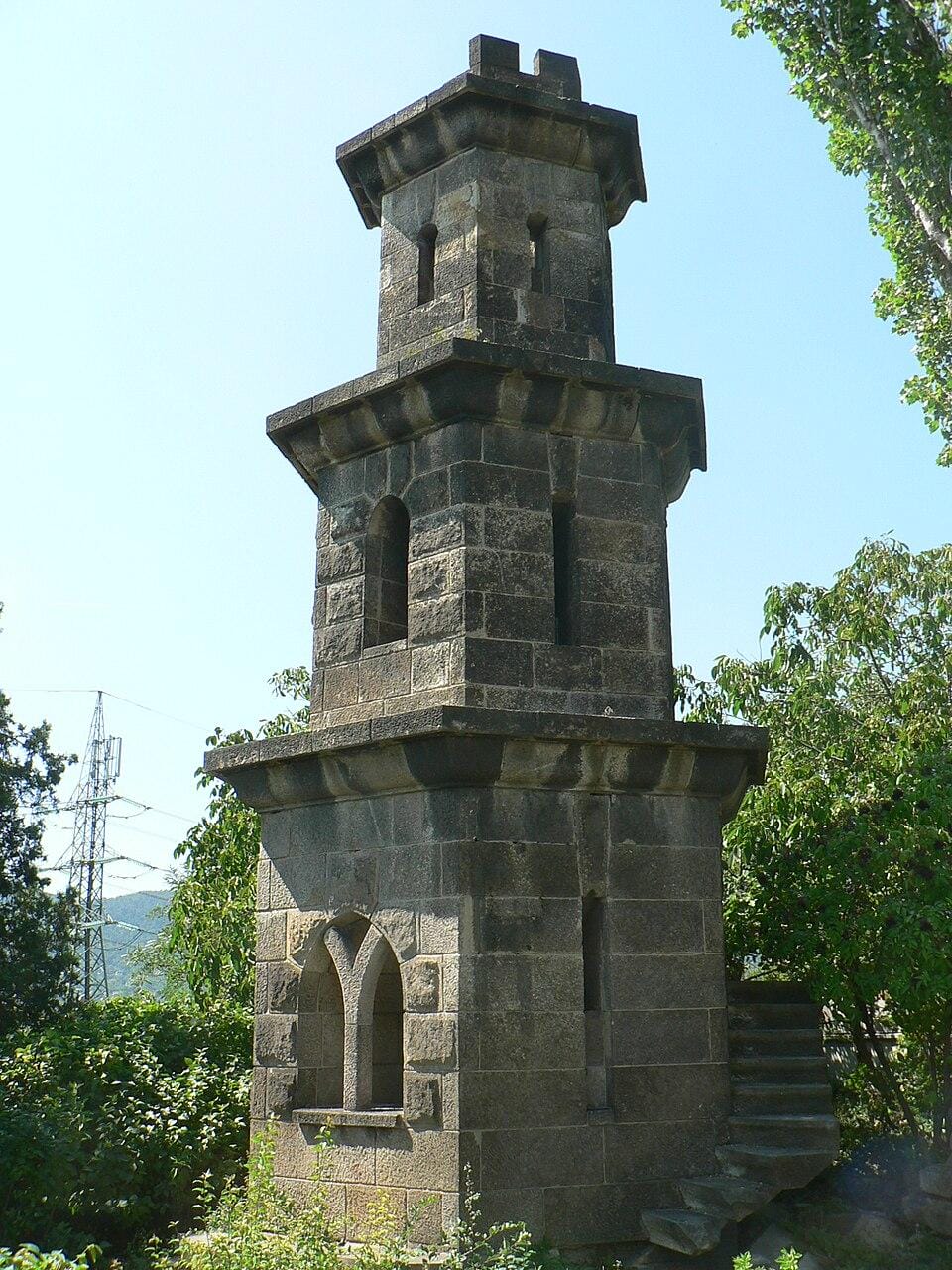
On the outskirts of Budapest (in the Aranyed district), there’s a unique historical monument — the Pagan Tower (also called the Turani Tower). It was built in the 1930s, and it’s the only one of 12 structures built by the Turanian movement that’s still standing. The tower is tied to the “Turanian curse” legend, which says that the Hungarian people are destined to be divided forever because King Stephen killed the pagans. The building has a lot of architectural and historical value, but it’s in bad shape right now. It’s not safe to climb it.
If you’re looking for a place that’s a bit off the beaten path, not too far from Budapest, then this is definitely worth checking out. Promotions covers this topic.
“We’ll show you a hidden treasure of Budapest that’s not only interesting because few people know about it, but also because its history deserves a few minutes of attention. This rare find is the only pagoda of the 12 towers built by pagans that, even though it’s in ruins, still stands,” the article says.
There’s this legend about the Turanian curse, and it’s like the Hungarians are supposed to be cursed because King Saint Stephen got rid of the pagans. Because of this curse, the Hungarian people will always be divided and split, according to legend.
The Turanist Tower was built by Turanists in the 1930s, and it’s currently located in the quiet, green area of Aranyed in the 3rd district of Budapest. You can get there easily from the Arpad Bridge by bus No. 160 or by train from Nyugati Railway Station. Then it’s just a 10-minute walk to the destination.
The Turanistic Society got its start in 1910 with the sole focus of promoting scientific and oriental studies. At that time, the political trend was also shifting towards the East, so the society took on an ideological character.
Some of the people there who worked on oriental studies and researched Asia were Armin Vambery, Ferenc Hopp, and Béla Széchenyi. During World War I, Hungary teamed up with Turkey and Bulgaria, which only made the ideological side of the conflict stronger. This pushed science to the side, and the scientists who stayed true to science separated themselves from the extreme Turanists. Among them was the orientalist Gyula Hermannus, who tried to suppress the radical group in society and called them ignorant amateurs.
The only problem with the Pagan Tower right now is that the building isn’t very stable and it could collapse. We recommend climbing to the top, but it’s at your own risk.