
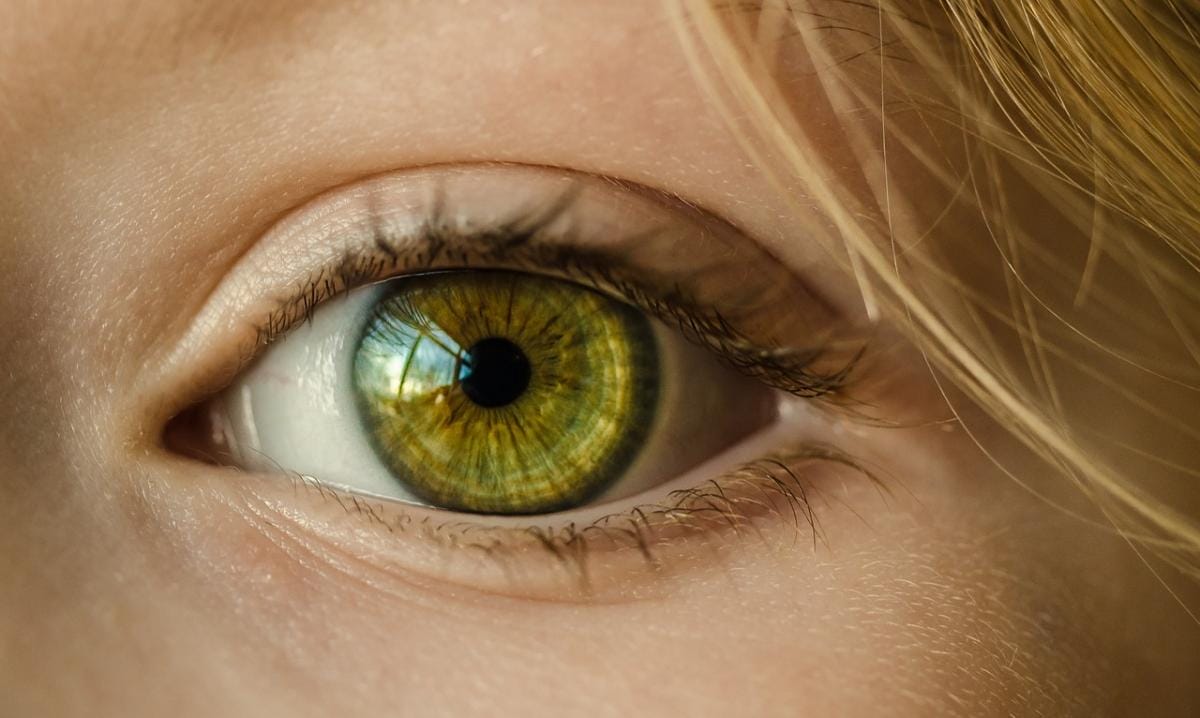

Only 2% of the world’s population has green eyes, making it the rarest eye color. Evolutionary biologists say that this happens because of a mix of genetic factors. They say that a medium amount of melanin and the yellowish pigment lipochrome are needed for the green color to show up. The main ideas about why so many people in Northern Europe have light eyes have to do with adapting to long, dark winters (light transmission helps with regulating your body clock) and sexual selection. It’s interesting because there’s no such thing as a green pigment. The color comes from the way light is scattered in the iris.
Only about 2% of the world’s population has green eyes. By comparison, brown eyes are found in nearly 80% of people, and blue eyes in about 8–10%. Scientists say that light-colored eyes are a pretty recent development, at least when you look at how they’ve evolved over time.
Forbes says that studies on ancient DNA show that just a few thousand years ago, most Europeans had dark hair, skin, and eyes. Light pigmentation started spreading out later, and scientists are still trying to figure out why.
One of the main ideas is related to the climate of Northern Europe. In a 2022 study published in the “American Journal of Biological Anthropology,” researcher Mark Lukok said that a light-colored iris lets in more light, which might have helped people deal with long, dark winters more easily. It’s thought that this affected people’s biological rhythms and lowered the risk of seasonal depression. Back in ancient times, that could’ve really messed with someone’s ability to survive and reproduce.
Another idea is that it’s related to sexual selection. Since light-colored eyes were rare, they stood out and may have seemed more attractive. Over time, this trait became set in their genes.
The OCA2 and HERC2 genes are key players in eye color. They control the amount of melanin in the iris. Green is considered rare because it requires a specific combination of factors to appear: a moderate amount of melanin, the yellowish pigment lipochrome, and a specific scattering of light within the eye tissues.
It’s actually pretty interesting that there’s no green pigment in the iris. This color is just an optical illusion, kind of like how the sky looks blue.
Any change in this complex system usually results in a different eye color—blue, brown, or hazel. That’s why green eyes are so rare.