
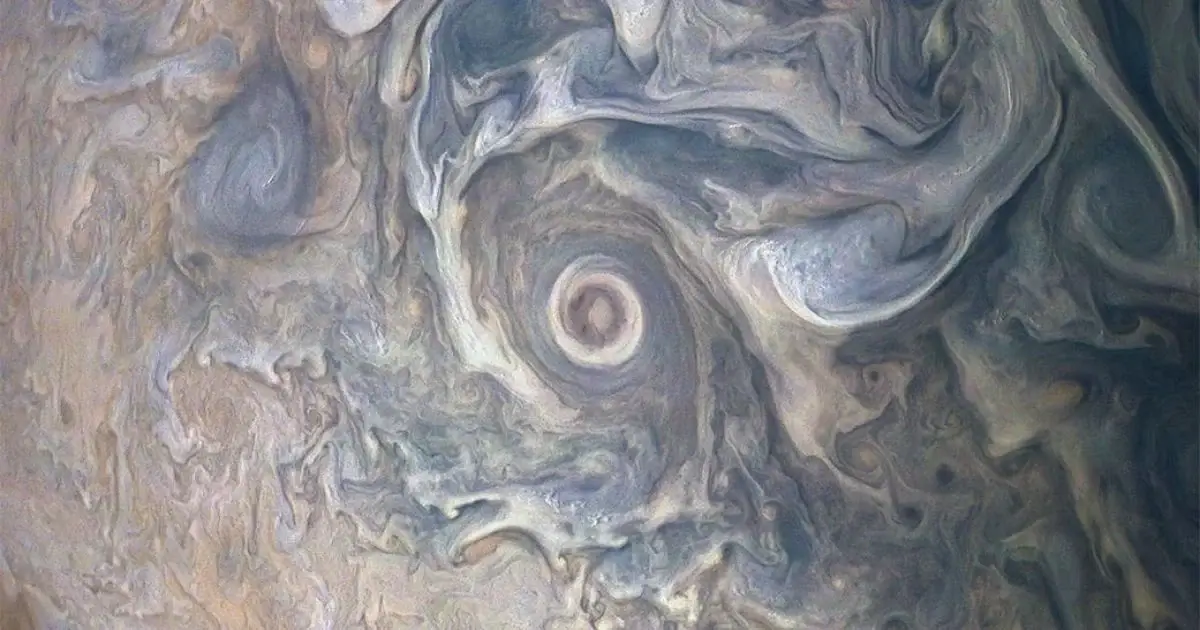

NASA’s Juno probe, the Hubble Space Telescope, and ground-based observers have recently shown that lightning on Jupiter is at least 100 times more powerful than any electrical discharges found on Earth. Scientists were able to measure microwave pulses from individual “megastorms” because there was a rare period of calm in Jupiter’s Northern Equatorial Belt between 2021 and 2022. These findings confirm that the gas giant has a really strong atmosphere, and it produces high-energy flashes. This gives researchers a new “window” into the complex and turbulent atmospheric dynamics of the solar system’s largest planet.
The ancient Greeks had no idea just how aptly they named Jupiter after the thunder-wielding Zeus. New observations from space telescopes and probes have shown that lightning strikes on this giant planet are at least 100 times more powerful than those on Earth. IFLScience has more on this.
Storm observations you won’t want to miss
Jupiter is known for its extremely active weather, which usually makes it difficult for scientists to pinpoint the sources of lightning. But in 2021 and 2022, things calmed down over the planet’s northern equatorial belt. This let researchers point the Hubble Space Telescope and ground-based amateur telescopes at the area studied by NASA’s Juno probe, which has been in orbit around Jupiter since 2016.
The Juno spacecraft can’t directly see lightning, but it can pick up microwave pulses that are emitted during electrical discharges. Since astronomers knew exactly where the storm was, they could measure how strong the flashes were and compare them with Earth-based measurements. The info gathered was a real game-changer because lightning radiation offers a unique glimpse into understanding the behavior of the planet’s atmosphere.