
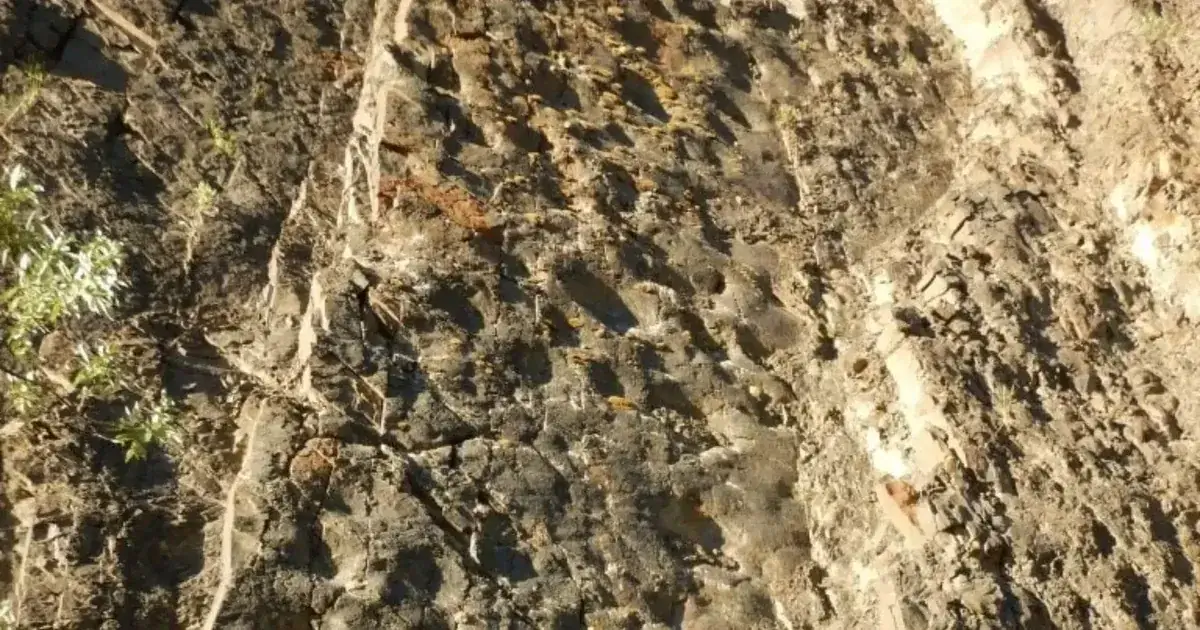

Paleontologists have found the largest site of dinosaur tracks in Alaska, in Denali National Park. They’ve named it “The Colosseum.” The site has thousands of fossilized footprints from the Late Cretaceous period (about 70 million years ago). They’re on vertical rock walls over 20 stories high. These walls used to be a flat floodplain, but they were lifted up by tectonic processes. The tracks belong to large herbivores (duck-billed and horned dinosaurs) of various ages, as well as predators—tyrannosaurs, birds, and flying reptiles. We’ve found fossilized plants and mollusks that show us what the region’s ecosystem was like back then. It was a lot warmer, with dense forests and a developed river system.
In Denali National Park and Preserve, paleontologists have found the largest site of dinosaur tracks in Alaska. The site, called “The Colosseum,” has thousands of fossilized footprints of prehistoric animals that lived around 70 million years ago during the Late Cretaceous period. The Daily Galaxy reported this.
Here’s what we know about how the site was discovered and what makes it so unique
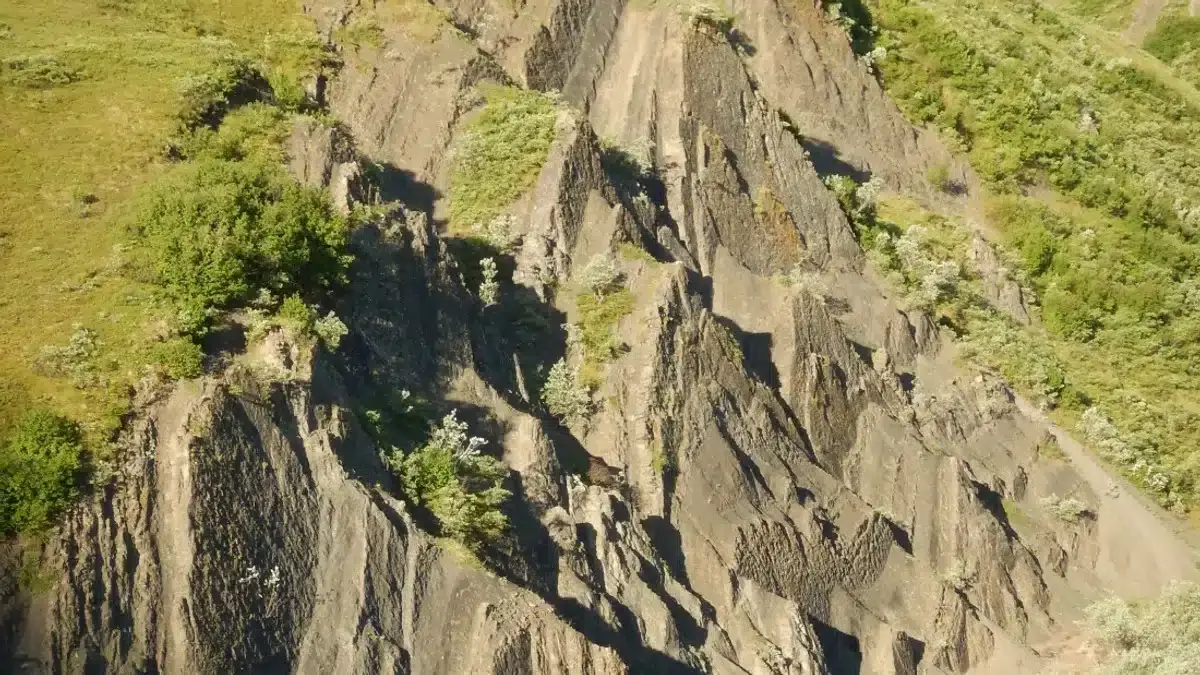
The site is about the size of a small shopping mall, and it’s different from other areas in the park that have been discovered before because it has a lot of layers of tracks that keep repeating.
“It’s not just a single layer of rock with tracks on it. It’s a process that happens over time. There have been other known track sites on Denali before, but nothing on this scale,” said lead author Dustin Stewart.
At first, the scientists didn’t realize how big the discovery was because they only noticed a few tracks at the base of a cliff that looked like a regular rock formation from the outside. The scene changed at sunset, when the light hit the wall at a right angle, showing hundreds of other tracks.
“When the sun is in just the right spot around these beds, they really thrive. We were all just amazed at first,” Stewart said.
The vertical rock walls, which now rise more than 20 stories high, were millions of years ago a flat, muddy floodplain with rivers and ponds. Dinosaurs often strolled across these pliable sediments, leaving straight tracks or impressions that were later filled with other sedimentary rocks and hardened.
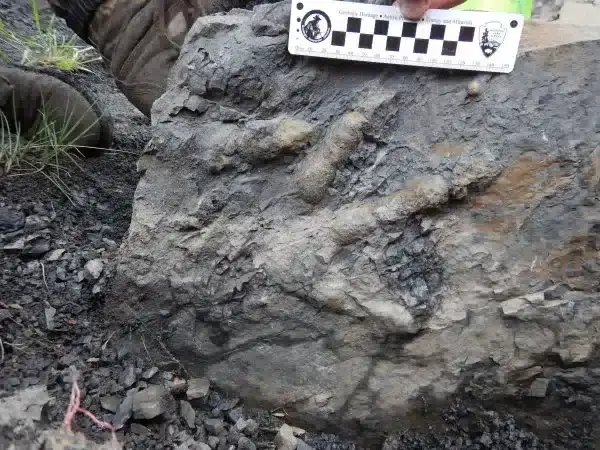
Tectonic processes during the formation of the Alaska Range eventually flipped these layers upward. Pat Drakenmiller, the director of the University of Alaska Museum of the North, said that on some of the footprints, you can still see the shape of the toes and the texture of the animals’ skin.
Research into the ancient ecosystem
We found more than just reptile tracks at the excavation site. There were fossilized plants, pollen, freshwater mollusk remains, and traces of invertebrates too. This allowed researchers to reconstruct the region’s ancient environment.
“All these little clues paint a picture of what the environment looked like overall,” Dustin Stewart pointed out.
During the Late Cretaceous period, the climate in Alaska was a lot warmer. The landscape was similar to the modern Pacific Northwest, with a developed river system, lakes, forests, and lots of ferns and horsetails.
The Animals of Prehistoric Alaska
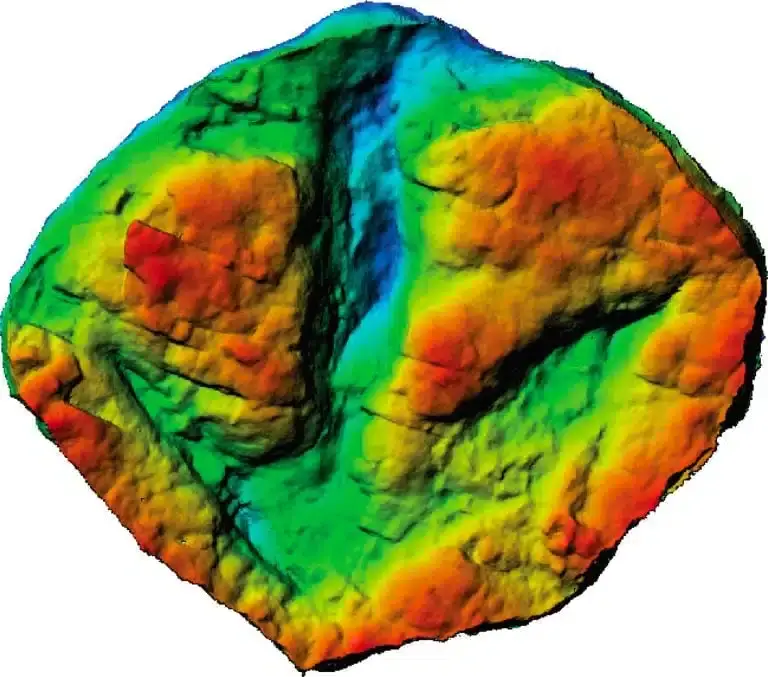
Most of the tracks we’ve found belong to big, plant-eating dinosaurs, like duck-billed and horned ones. Scientists have found tracks from both adults and young animals, showing that this area was home to different generations of animals over a long period of time.
We’ve also found evidence of predators like tyrannosaurs and birds of prey, as well as smaller tracks of flying reptiles.
“A T-Rex roamed Denali, and it was way bigger than the biggest brown bear that lives there now. There were birds of prey. There were flying reptiles. There were birds. It was an amazing ecosystem,” Pete Drakenmiller pointed out.
Right now, the “Colosseum” site is being looked after by the U.S. National Park Service, and they’re the ones who’ll be handling any more scientific work there.