
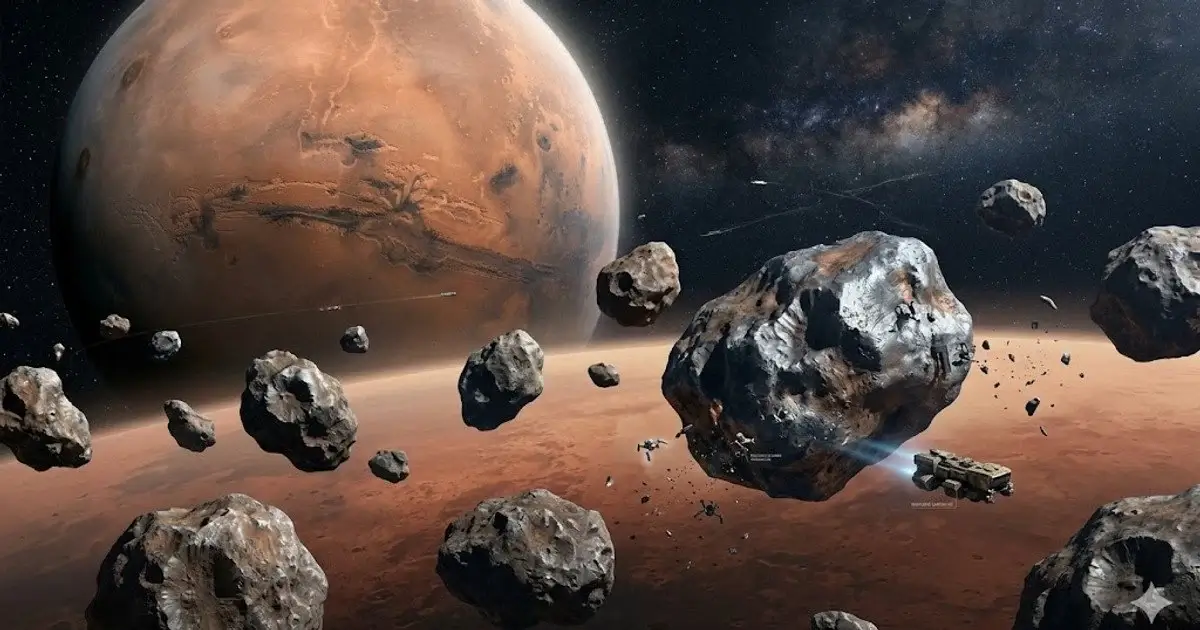

Swiss scientists from the Swiss Federal Institute of Technology in Lausanne used computer modeling to figure out that mining resources on asteroids is key to successfully colonizing Mars. Delivering heavy metals and fuel from Earth is too expensive and time-consuming, so researchers suggest using M-type asteroids, which are rich in iron and nickel, to build Martian infrastructure. On top of that, carbonaceous asteroids with water ice (like 253 Matilda) could be used as “space refueling stations” to produce rocket fuel right in space. This would significantly reduce the launch mass of spacecraft and make flight logistics easier. We can already solve these logistical challenges using existing or promising technologies.
Building a permanent settlement on Mars is going to require a huge amount of metal to create habitats, tools, and machines. But delivering these heavy loads from Earth is too pricey and time-consuming. A single trip between planets takes up to nine months.
The Daily Galaxy says that Swiss scientists from the Swiss Federal Institute of Technology in Lausanne (EPFL) have found that materials already floating in space could be the key to fully colonizing the Red Planet.
Asteroids as a Source of Metal for Martian Colonies
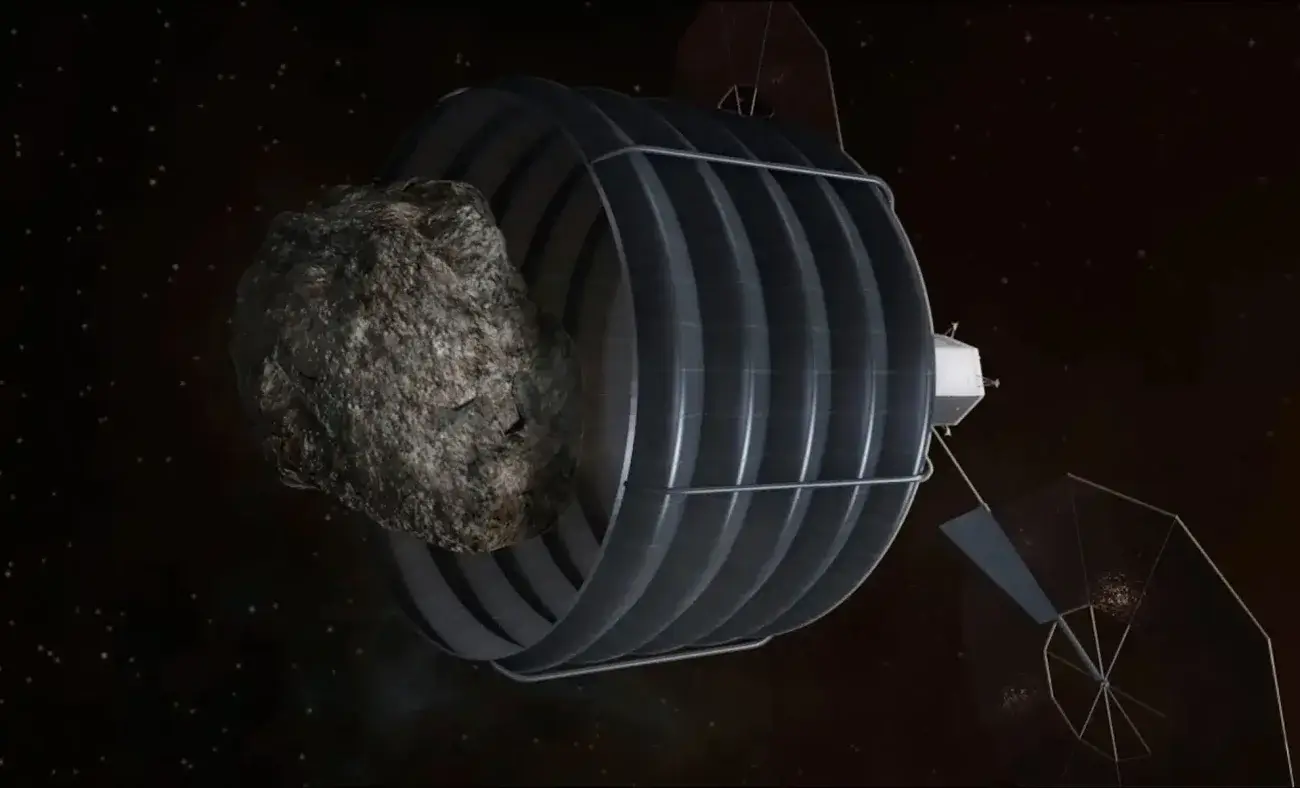
The researchers zeroed in on logistics and M-type asteroids, which are loaded with iron and nickel. To test if it’s possible to extract resources there, the team made a special computer model. It looked at thousands of possible routes between these celestial bodies and Mars, thinking about fuel costs, energy, and how much of the stuff could be extracted and delivered.
As it turns out, picking the right asteroid is key to success. Some objects were too energy-intensive for flights, while others are quite accessible and efficient for regular transport missions.
Space Refueling Stations of the Future
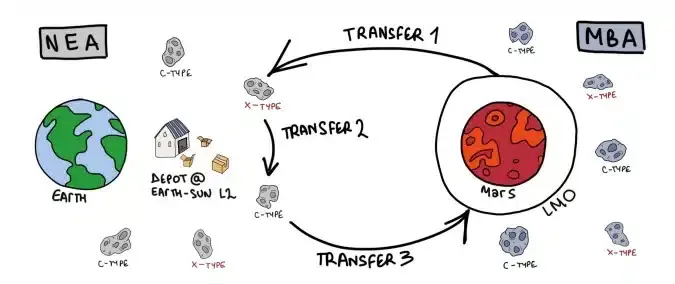
In addition to metal, future colonists will need a lot of fuel. Carbon-rich asteroids, which contain water ice and carbon-rich materials, are ideal for this purpose. You can use them to make rocket fuel right in space. For example, scientists are talking about an object called 253 Matilda, which a NASA spacecraft has already come close to.
Thanks to these “space refueling stations,” spacecraft won’t have to carry all their fuel from Earth. They’ll be able to refuel near the asteroid before flying to Mars. This’ll significantly reduce the launch mass of spacecraft and make future missions easier.
The study’s authors emphasize that we’re still a long way from developing large-scale mining systems and equipment that can operate in space for extended periods. But the logistics of this problem are totally solvable, even with the technologies we have now or will have soon.