

A Franco-Egyptian archaeological mission led by Frédéric Colin of the University of Strasbourg has discovered a sealed sarcophagus in Luxor (ancient Thebes). The 3,400-year-old find was dug up about 8 meters beneath the processional road of Pharaoh Thutmose III. Back in 2018–2019, five sarcophagi had already been found at this site, and the ancient builders had respectfully reburied them while laying the ceremonial route. But the sixth sarcophagus surprised scientists because there weren’t any other burial goods with it. Because of time constraints, the coffin was left unopened until the next expedition, but scientists have already confirmed the presence of a human body inside, wrapped in a linen shroud, through a small hole.
The ancient city of Luxor in Egypt has once again amazed visitors. Archaeologists thought they had seen it all, but they were wrong. Another mystery hidden deep beneath the sands came to light. This new information sheds light on the New Kingdom period of Ancient Egypt. It has also sparked a wave of excitement among researchers and history enthusiasts around the world. Futura Sciences has the scoop.
A team of Egyptologists from the University of Strasbourg has finished its fieldwork in Luxor, Egypt (also known as Thebes). They were digging near the processional road of Thutmose III, a pharaoh of Egypt’s 18th Dynasty.
Just before the expedition wrapped up, luck (and a lot of patient digging) was on their side: Egyptian archaeologists working with French specialists found a sealed sarcophagus buried about 8 meters below the surface of the ancient road that once led directly to the impressive Temple of Thutmose III.
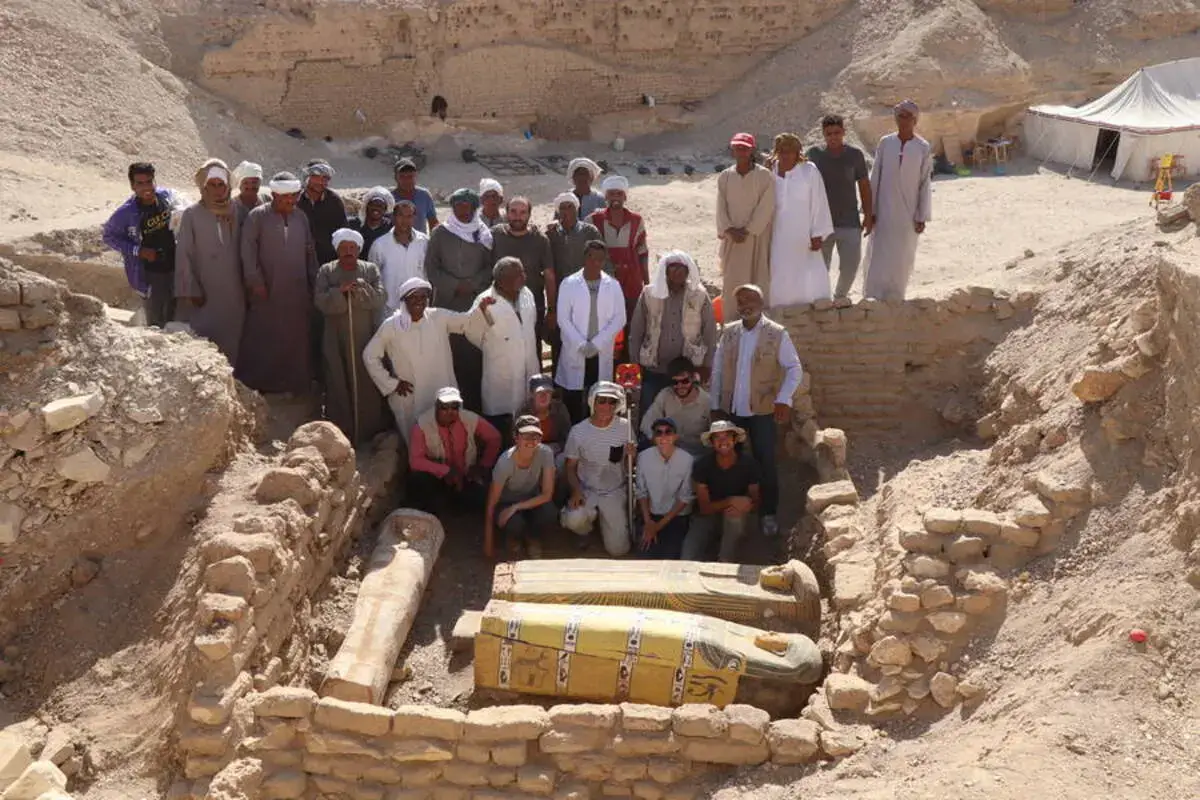
The archaeological site, which is about 13 by 10 meters, has been a great place for the Strasbourg team to find treasures every season. As early as 2018 and 2019, we found five sarcophagi here, each from before the reign of Thutmose III. Frédéric Colin, the director of the Institute of Egyptology at the University of Strasbourg and the head of the excavations, explained:
“Each time, these were reburied sarcophagi. The original burials, which were along Thutmose III’s processional road, were probably moved by the workers who were building it.
It’s important to note that while most of the finds aren’t in their original burial locations, they still give us a fascinating insight into funeral rites and ancient urban planning. It turns out that ancient construction crews showed great respect for the deceased—even pausing monumental work to rebury bodies when necessary.
The Mystery of the Sixth Sarcophagus
As Colin mentioned, the first five reburied sarcophagi came with some impressive grave goods—gifts and objects placed with the deceased to help them on their journey to the afterlife. But this sixth sarcophagus that was recently discovered doesn’t seem to have any of that. We’ll have to wait until the next expedition to find out the answer to this mystery. The archaeologists plan to finally open the sealed coffin then.
Because they were short on time, the researchers had to leave the sarcophagus untouched and unopened. But curiosity got the better of them, and one of the researchers managed to peer through a small hole in the stone, confirming the presence of a human body inside, wrapped in linen cloth. But we’ll have to wait a while to find out who it is.
When the team returns, the opening of the sealed sarcophagus may provide important information about funeral and anthropological practices from 3,400 years ago, at the dawn of Egypt’s New Kingdom.