
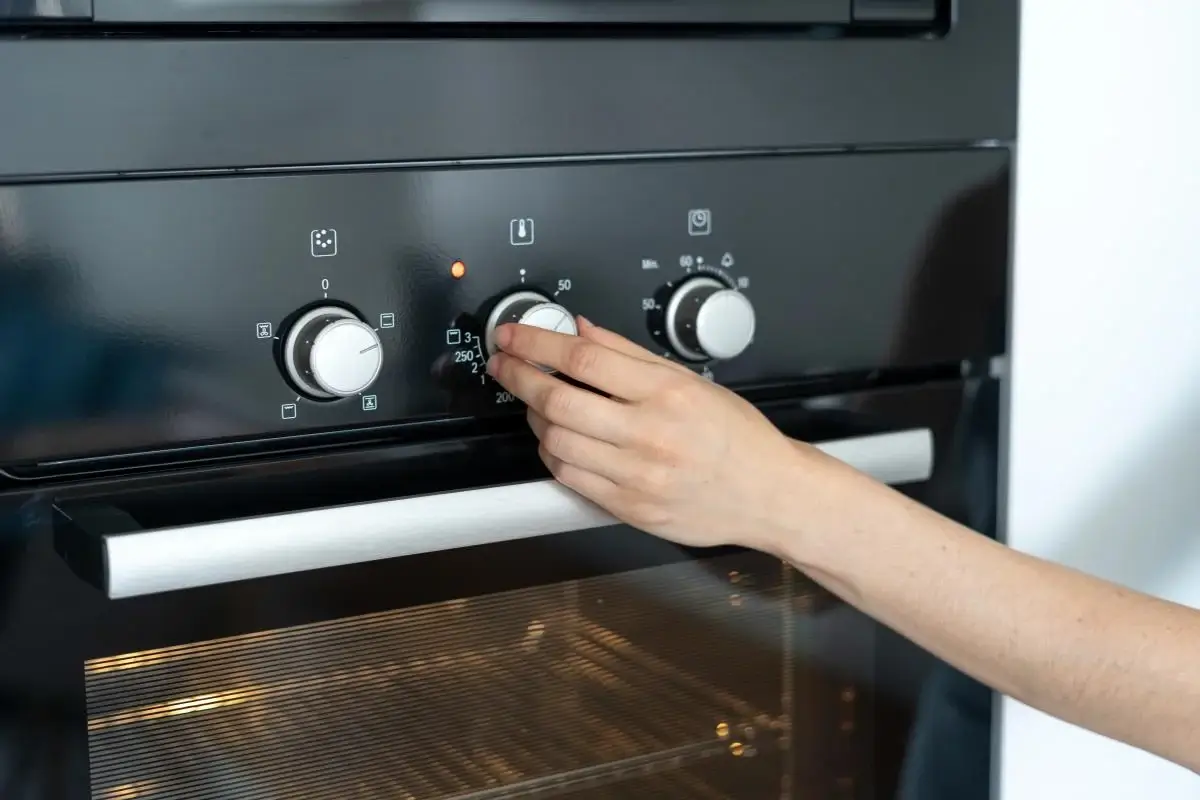

The fan icon on the oven has two modes, but they’re often confused. If the fan doesn’t have a circle, it’s in convection mode. That means the top and bottom heating elements are on, but the fan just circulates the heat. This is a great mode for meat and vegetables, and you can lower the temperature by 20°C. The fan inside a circle is the “turbo” or “fan oven” mode, where a separate ring-shaped heater operates around the fan. It delivers hot air right away and is great for cooking on multiple racks at the same time. But for delicate baking (like sponge cakes), this mode can be a problem because it dries out the surface of the dough before it rises.
You look at the oven knob, see the small fan icon, and turn it. Most people stop there. The oven heats up, you put the food in, and eventually dinner is ready. But that tiny fan icon on your control panel actually hides two different functions, and choosing the wrong one can quietly ruin a cake or waste an extra bit of electricity, according to Indian Defence Review.
There’s just one visual detail that’s causing problems
In one version, the fan symbol is just the blades standing alone against the control panel. In the other version, those same fan blades are placed inside a circle. These two symbols control different heating systems inside the appliance.
The first setting uses the fan to circulate the existing heat. The second setting activates a separate ring-shaped heating element wrapped around the fan itself. Mixing them up means using a heat source that’s not intended for that dish in the oven.
The fan-only setting is there for one reason: the simple fan icon activates air circulation. Behind the control panel, the oven activates its standard top and bottom heating elements. Then the fan kicks in to move the heat around in the chamber, getting rid of any cold spots and making sure the temperature is even.
This mode is a reliable all-rounder. Roasts brown more evenly. A baking sheet of vegetables cooks all the way through without a raw center. If you bake your cookies on a few different baking sheets, you’ll find that they come out closer in color to those on the middle rack. The fan just moves the air around what the main heating elements are already making.
Temperature here becomes a lever for energy savings. You can use air circulation to set the temperature about 20°C lower than in a recipe written for standard top and bottom heating. Moving air can transfer heat more efficiently to the food’s surface, so you’ll need less energy to achieve the same level of doneness inside.
The fan in the ring does something totally different
When a ring appears around the fan, the oven changes tactics. The key heating element isn’t the usual top or bottom coil. Instead, there’s a ring-shaped heater located right behind the fan blades. Air goes through this ring, gets heated up instantly, and then gets blown into the chamber.
This hot-air mode usually makes preheating unnecessary. The oven heats up quickly because it’s got a concentrated heat source. You can put food in a cold oven and it’ll still cook right because the ring heater and fan work together to deliver heat super quickly.
Hot air is great when you’ve got a bunch of baking sheets in the oven at once. Powerful circulation circulates hot air between the layers of dishes, cooking food on the top and bottom shelves at the same rate. Frozen foods, dinners on a single baking sheet, and batches of holiday cookies all benefit from this intense airflow.
Cooker Solutions Ltd., a British home appliance repair service, calls this configuration a “fan oven.” Their tech team said that the heat comes from a ring around the fan, not the oven’s main walls. The company says this design lets you cook the meat until it’s tender on the inside and crispy on the outside.
Hey, home bakers! There’s a special warning for you: one setting dries out cakes, while another doesn’t. Don’t use the hot air mode with delicate dough. Sponge cakes, shortcrust pastry, and any recipes that rely on trapped air bubbles for rising can be ruined by the intense airflow from the ring heater.
The issue is that the surface dries out. If the dough is too hot and the air is moving too fast, it’ll take the moisture out before the proteins and starches can stick together. The surface of the cake forms a crust too soon. The trapped steam pushes upward unevenly from below, creating a lopsided dome or a cracked crust. The same dough, when baked in convection mode or with standard top-and-bottom heating, usually rises evenly and stays tender.
The strong thermal effects of the “fan-assisted” mode can be problematic for some types of baked goods. Denser products do well in dry, intense environments. Fragile dough doesn’t.
There are other important indicators on the control panel.
In addition to the fan symbols, control panels from various brands have several other indicators. If you see a single horizontal line at the bottom of the square symbol, that means the lower element is heating up. This mode heats up the bottom of the food really well, which is great for getting a crispy crust on pizza or setting the dough base before adding wet toppings.
Two zigzag lines at the top of the symbol activate full grill mode. The heat from the ceiling of the oven browns the surface of casseroles or cooking thin cuts of meat. A single zigzag line on the grill means that only part of the grill is heated, which is great for smaller portions and saves energy.
The fan symbol, shown above a single horizontal bottom line, combines two functions. The fan circulates air, and the bottom element serves as a heat source. This setting is great for pre-baking pie crusts and quiche bases.
The lightbulb icon shows you the interior light of the oven. Some models let the light work without the heating elements, which is great for cleaning up after cooking. The snowflake or water droplet symbol indicates the defrost mode. The fan circulates room-temperature air around frozen foods to speed up thawing without starting the cooking process.
The best choice depends on what you’re cooking.
Roasting vegetables or a whole chicken on one baking sheet is best when you use air circulation. The fan keeps things comfortable without going overboard like a ring heater. It’s great for baking sheets full of frozen appetizers or a big batch of cookies on two shelves, and it’s more consistent than other methods.
When you’re baking bread, making multi-layer cakes, or slow-baking casseroles, the best option is still to use conventional top and bottom heating without a fan. Still air provides gentle, reliable heat transfer that retains moisture and helps bread rise properly.
The broil function handles short tasks at high temperatures. You can use it to melt cheese on a finished gratin or to add a final sear to roasted meat. It’s a good idea to check the manual for the door position while broiling, since designs can vary by manufacturer.