
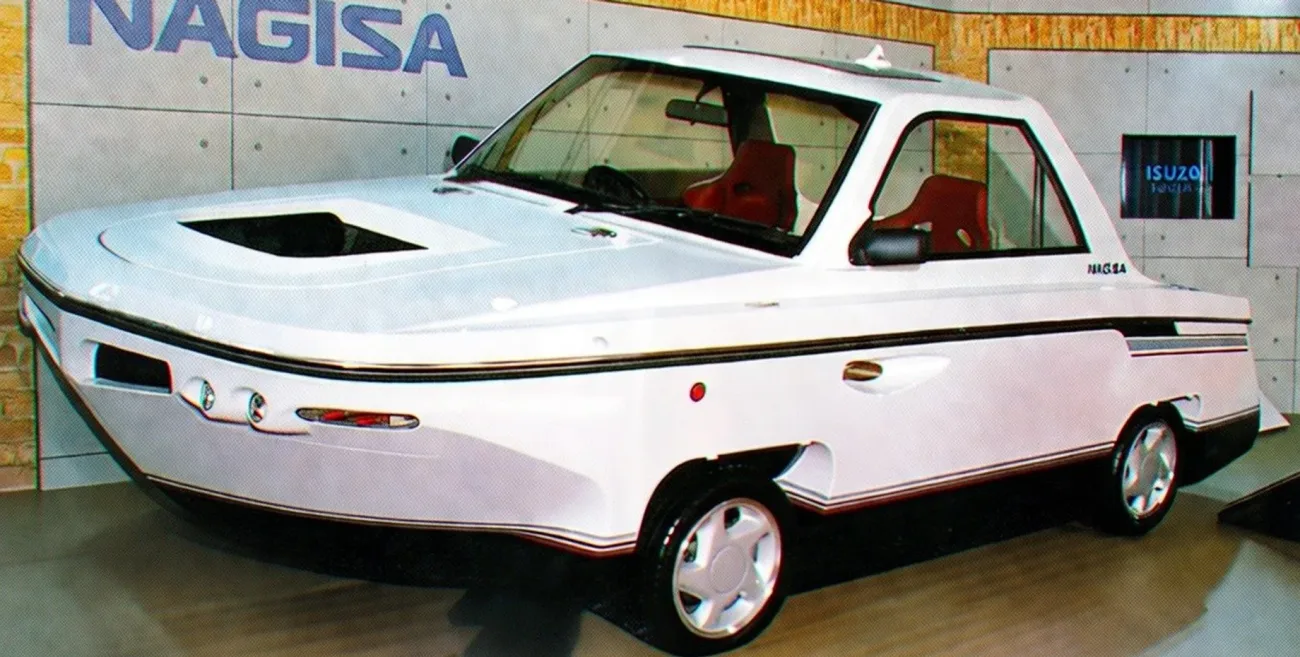

Back in the early ’90s, Isuzu was planning a major shift in the vehicle market. They were working on a whole line of amphibious vehicles. The Nagisa prototype, which was shown at the 1991 Tokyo Motor Show, is a great example of this idea.
Not many people know that back in the 1990s, Isuzu tried to mass-produce amphibious vehicles and came up with the unique Nagisa model, which combined the features of a car and a boat. The Isuzu Nagisa was one of the most unique projects in the history of the Japanese automaker. The original car was featured on the Carakoom website.
The Isuzu Nagisa amphibious vehicle first showed up at the 1991 Tokyo Motor Show. The car maker said right away that this wasn’t just another idea, but a model of a future production car.
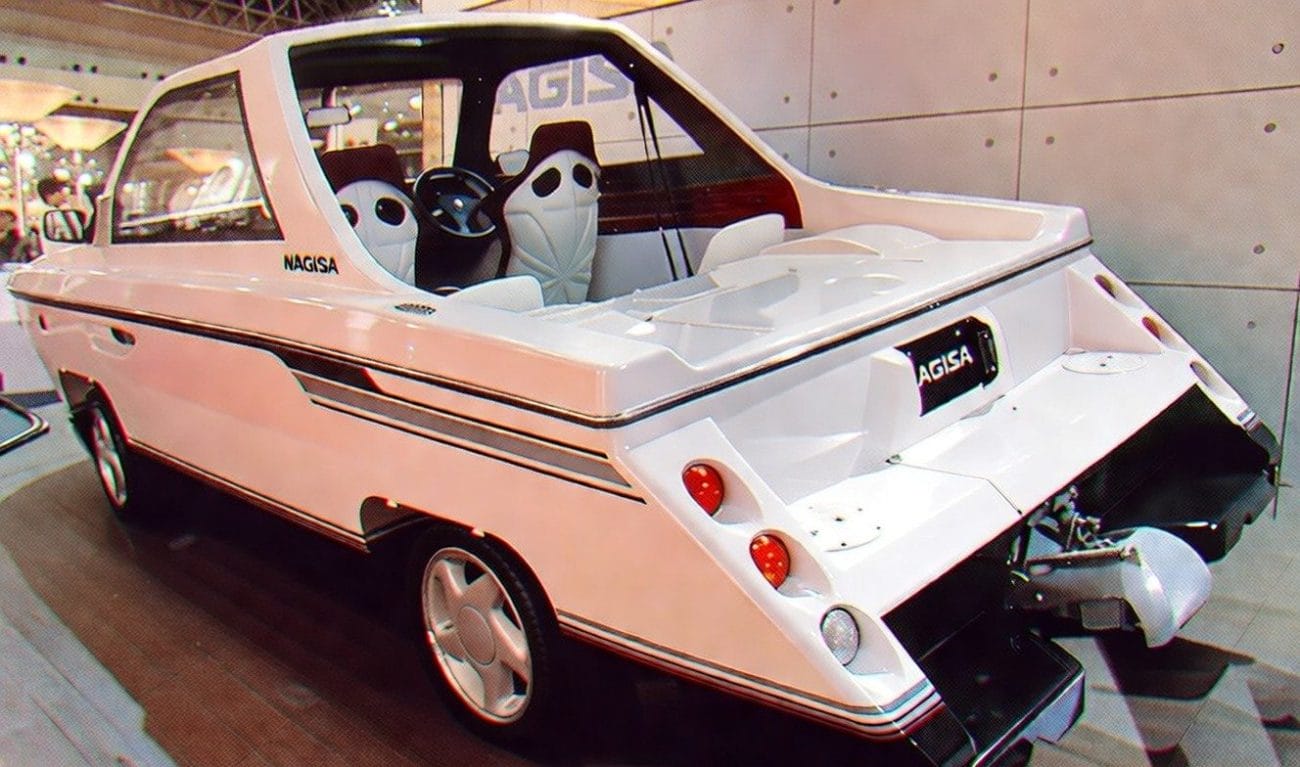
Back in the early ’90s, Isuzu’s management came up with this cool idea of creating a whole family of amphibious vehicles of various sizes — from miniature city models to family cars. They planned to sell them in areas with a lot of water bodies, where people buy both cars and boats.
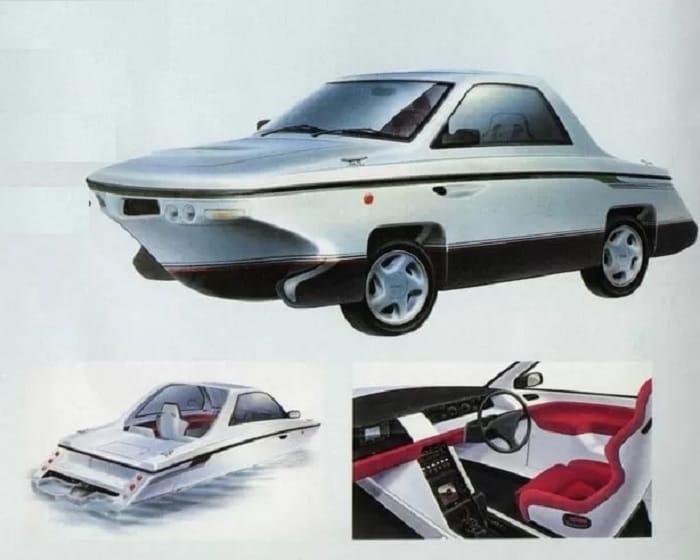
The Isuzu Nagisa looked like a car on wheels — it had a fiberglass body with a big “nose” and a deck at the back. They put four seats in there.
The amphibious vehicle had a 3.2-liter V6 gasoline engine with 175 hp, similar to the one in the Opel Frontera. It powered all four wheels (the Isuzu Nagisa was all-wheel drive) and also drove the water jet propulsion system. The top speed on land was 100 km/h.
But tests showed that the Isuzu Nagisa was slow and unwieldy on the road, and it didn’t have much stability on the water. Also, over time, the company’s management lost interest in amphibious vehicles, and the original car never went into production.